

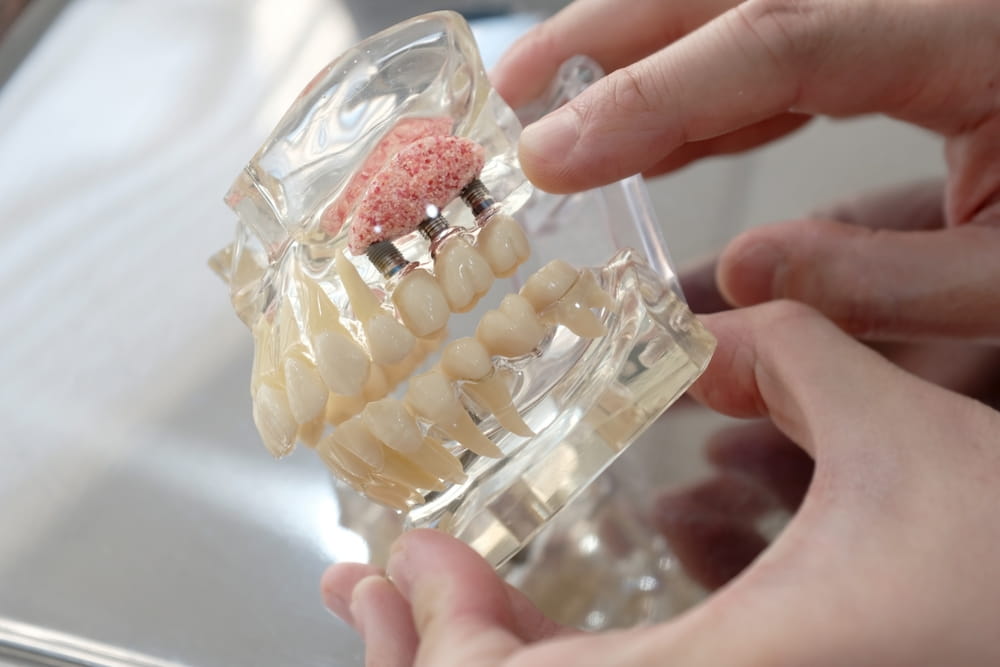
Replacing missing upper back teeth with dental implants can be more complex than placing implants in other parts of the mouth. In the upper jaw, the sinus cavity sits just above the roots of the premolars and molars. When teeth have been missing for a long time, the jawbone in this area may shrink while the sinus space gradually expands downward. This can leave too little bone height to securely place an implant.
For patients researching treatment options in Holmdel, NJ, understanding this anatomy is helpful. Holmdel Periodontics & Implant Dentistry and Dr. Wayne Aldredge often educate patients that a sinus lift is designed to rebuild bone in the upper jaw so implants have a stable foundation. Rather than forcing treatment into an area with limited support, the goal is to create the right conditions for long-term success.
What a Sinus Lift Actually Does
A sinus lift, also called sinus augmentation, is a procedure that gently raises the sinus membrane and places bone grafting material beneath it. This creates additional vertical bone height where implants may later be placed. Over time, the graft integrates with the body’s natural bone and strengthens the area.
This procedure is commonly recommended when upper molars or premolars have been missing for years, bone loss has occurred from gum disease, or the natural sinus anatomy limits available space. In some cases, advanced grafting methods such as Bone (Hard Tissue) Grafting or S.M.A.R.T. Bone Grafting may be part of the treatment approach.
Signs a Patient May Need a Sinus Lift
Not every upper jaw implant requires this procedure. A detailed exam and imaging study are used to measure bone volume and determine whether extra support is needed. Patients may be candidates if they have:
- Missing upper back teeth for an extended period
- Significant bone loss after extraction
- Previous periodontal disease in the area
- Naturally large sinus cavities
- Difficulty supporting standard implant length
The only way to know for sure is through a professional evaluation. Many patients are surprised to learn that even if they feel healthy and have no symptoms, hidden bone loss may still affect implant planning.
What Recovery Is Usually Like
Most patients tolerate sinus lift treatment well. Mild swelling, congestion, tenderness, or pressure in the cheek area can occur during early healing. Patients are often advised to avoid forceful nose blowing, sneezing with the mouth closed, or heavy pressure changes while the area recovers.
Healing time varies depending on how much grafting was needed and whether implants were placed at the same time. Some cases allow immediate implant placement, while others benefit from a healing period first. If a damaged tooth remains before treatment, Tooth Extractions may be completed before moving forward with Dental Implants or full-arch solutions such as All-on-4 Dental Implants.
Building a Strong Foundation for Long-Term Results
A sinus lift is not simply an extra step—it is often the key to making implant treatment possible in the upper jaw. By rebuilding lost bone and creating proper support, the procedure helps improve stability, function, and long-term success.
For individuals exploring tooth replacement options in Holmdel, NJ, Holmdel Periodontics & Implant Dentistry and Dr. Wayne Aldredge encourage patients to view careful preparation as one of the most important parts of successful implant care. Strong results often begin with a strong foundation.
Resources
Wallace, S. S., & Froum, S. J. (2003). Effect of maxillary sinus augmentation on implant survival. Annals of Periodontology.
Pjetursson, B. E., Rast, C., Brägger, U., et al. (2009). Maxillary sinus floor elevation using the lateral window approach. Clinical Oral Implants Research.
Misch, C. E. (2008). Dental Implant Prosthetics. Mosby.