

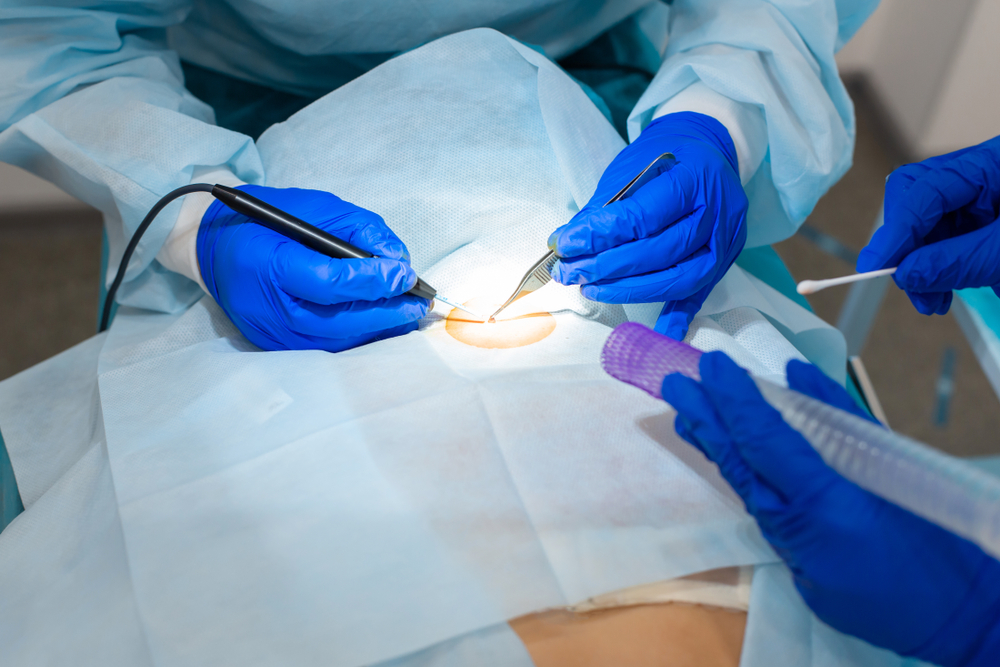
Advances in medical science have reshaped how we diagnose and treat illnesses, and laser technology is at the forefront of this innovation. One of the most exciting developments in recent years is how lasers are enhancing biopsies and early cancer detection—critical processes that can significantly impact patient outcomes. This blog will explore how laser technology improves diagnostic precision, reduces recovery time, and contributes to earlier, more effective cancer detection. For those in the Holmdel, NJ area, including patients of Holmdel Periodontics & Implant Dentistry, led by Dr. Wayne Aldredge, understanding these technological advancements can offer deeper insight into the evolving landscape of modern medicine.
The Importance of Early Cancer Detection
Detecting cancer at its earliest stages is crucial for effective treatment and long-term survival. When cancer is found early, it is typically smaller, hasn’t spread to other parts of the body, and may be easier to treat. This means less aggressive treatment options and better outcomes for patients. In many cases, early detection can even be life-saving.
Early detection often depends on routine screenings and biopsies to identify abnormal tissue before it becomes malignant. Traditional methods for these screenings, while effective, can sometimes be invasive and time-consuming, leading to delays in diagnosis or missed abnormalities. This is where laser technology comes in—offering a more efficient, less invasive method to help detect cancer in its infancy.
What Is a Laser Biopsy?
A laser biopsy is a medical procedure that uses focused light beams to remove or sample tissue for examination. Unlike conventional surgical methods that require scalpels or other manual instruments, lasers offer a high degree of precision with minimal disruption to surrounding tissues.
There are various types of lasers used in medical biopsies, including CO2 lasers, diode lasers, and Nd:YAG lasers. These lasers vary in wavelength and intensity, allowing doctors to tailor treatment to the specific needs of each patient and type of tissue. The technology can be used on both hard and soft tissues, making it particularly valuable in fields like dermatology, oral surgery, and gynecology.
In a laser biopsy, the targeted area is exposed to a concentrated laser beam that cuts or vaporizes the abnormal tissue. The removed tissue is then sent to a pathology lab for further analysis. Because lasers cauterize blood vessels as they cut, there is often less bleeding, swelling, and discomfort during and after the procedure.
Advantages of Laser Technology in Biopsies
Laser technology offers several advantages over traditional biopsy techniques. One of the most significant benefits is its precision. Lasers allow physicians to isolate and remove only the suspicious tissue, minimizing the risk of damaging surrounding healthy areas. This is particularly important when dealing with sensitive areas of the body, such as the oral cavity, throat, or cervix.
Another advantage is reduced healing time. Because lasers can simultaneously cut and cauterize tissue, there’s usually less bleeding and inflammation. This results in a quicker recovery period and a lower risk of infection. For patients, this translates to a more comfortable experience and less time off from daily activities.
Additionally, the use of lasers can lead to more accurate diagnostic results. Traditional biopsy methods may inadvertently alter or damage the sample during extraction. Laser biopsies, in contrast, can obtain cleaner tissue samples with well-defined margins, which enhances the pathologist’s ability to detect early signs of cancer.
How Lasers Contribute to Early Cancer Detection
Early detection relies heavily on identifying subtle changes in tissue before they develop into malignant tumors. Laser technology enables doctors to detect these changes sooner through techniques such as laser-induced fluorescence and Raman spectroscopy. These optical biopsy methods analyze how tissues reflect or emit light when exposed to laser beams, providing real-time data on their chemical composition.
In optical biopsies, no tissue is removed; instead, the laser light is used to assess cellular abnormalities directly. This is especially beneficial in areas where a physical biopsy might be difficult or risky. By examining how light interacts with cells, physicians can identify early signs of cancerous transformation—sometimes even before structural changes occur that would be visible under a microscope.
Furthermore, lasers can be integrated with imaging technologies to enhance early detection. For instance, Optical Coherence Tomography (OCT) uses low-intensity lasers to create high-resolution images of tissue layers, allowing for the detection of microstructural changes that indicate early-stage cancer. Such capabilities make lasers a powerful tool in preventive care and ongoing monitoring of high-risk patients.
Applications Across Medical Fields
Laser-assisted biopsies and detection technologies are being adopted across a wide range of medical disciplines. In dermatology, lasers are used to target suspicious skin lesions with minimal scarring. In gastroenterology, lasers help in identifying precancerous polyps during colonoscopies. In gynecology, laser biopsies can aid in the early detection of cervical cancer with greater comfort and accuracy than traditional methods.
Dentistry and periodontics are also embracing laser technology. Lasers can detect abnormal tissue in the mouth and gums, areas where cancerous growths may otherwise go unnoticed until they are more advanced. These advancements are especially valuable in detecting oral cancers, which are often diagnosed at a later stage due to subtle or asymptomatic presentations.
Even in oncology surgery, lasers are being used not only for diagnosis but also for treatment, allowing surgeons to remove tumors with high precision and reduced impact on healthy tissues. The versatility of laser technology underscores its growing role in comprehensive cancer care.
The Future of Laser Technology in Cancer Diagnostics
The future of laser technology in cancer diagnostics looks promising. As laser equipment becomes more advanced and affordable, its use is expected to become more widespread in both hospitals and outpatient clinics. Researchers are currently developing “smart lasers” that can differentiate between healthy and cancerous tissues in real time, potentially eliminating the need for external lab analysis.
Artificial intelligence and machine learning are also being integrated into laser diagnostics. Algorithms can analyze light-based data from tissue scans to identify patterns indicative of cancer, significantly improving the speed and accuracy of diagnosis. These AI-powered systems are already being tested in clinical trials and may soon become part of standard diagnostic protocols.
Moreover, laser nanotechnology is being explored for its potential to detect cancer at the molecular level. By using laser light to activate nanoscale sensors, scientists may be able to identify even the smallest traces of malignant cells in the bloodstream, opening the door to ultra-early detection methods that were previously unimaginable.
As these technologies mature, patients and providers alike will benefit from faster, safer, and more accurate diagnostics—offering a powerful weapon in the ongoing fight against cancer.
A Growing Need for Awareness and Education
While laser technology offers many benefits, widespread adoption also depends on public awareness and professional education. Many patients are still unaware of the options available to them or misunderstand how laser procedures work. Likewise, some healthcare providers may require additional training to implement laser-based tools effectively.
Educational initiatives and patient outreach are crucial to bridging this gap. As the general population becomes more informed about the safety, accuracy, and efficiency of laser diagnostics, they are more likely to seek out providers who use cutting-edge technologies. This, in turn, can lead to earlier diagnoses, better treatment outcomes, and a stronger overall healthcare system.
In conclusion, laser technology is transforming the landscape of biopsies and early cancer detection, offering more precise, less invasive, and increasingly accurate diagnostic tools. As this field continues to evolve, it holds the promise of saving countless lives through earlier intervention and better patient care. Residents near Holmdel Periodontics & Implant Dentistry in Holmdel, NJ, can take heart in knowing that innovations like these are shaping the future of healthcare.
Resources:
National Cancer Institute. (2021). Cancer Detection and Diagnosis Research. https://www.cancer.gov/research/areas/diagnosis
Muthu, J., & Rani, R. (2020). Laser Applications in Early Detection of Oral Cancer. Journal of Oral Biology and Craniofacial Research.
Sordillo, L. A., & Sordillo, P. P. (2019). The Use of Lasers in Biopsy Procedures: Clinical Potential and Future Directions. Lasers in Medical Science.